Halloween Weekly Planner
First Impressions: Playful, Practical, and Ready for Stitching
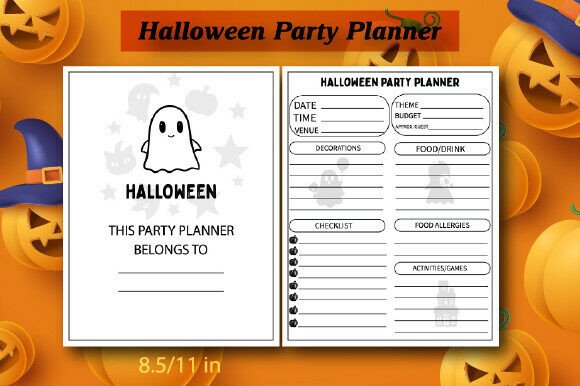
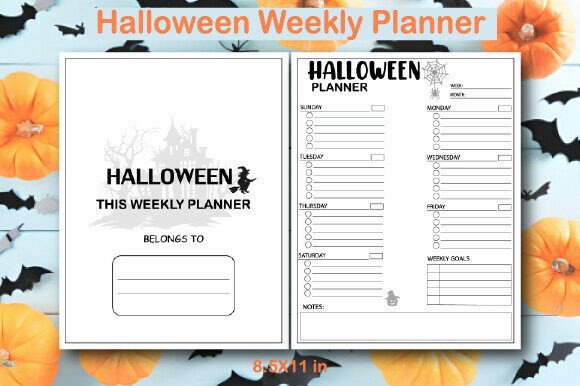
Opening the Halloween Weekly Planner files felt like unboxing a well-considered seasonal tool—not just decoration, but structure with charm. The 8.5×11 layout balances whimsy and utility: friendly jack-o’-lanterns flank clean weekly columns, subtle cobwebs frame the header, and the typography is legible without being stiff. It doesn’t scream “costume party”—it whispers “organized autumn.” That’s rare. Most Halloween graphics lean into clutter or cartoon extremes, but this one breathes. As a designer who’s stitched hundreds of planner-themed items for boutique clients, I immediately pictured it on a linen tea towel, a cotton apron, or even as a framed embroidery hoop art piece for a nursery.
Where It Shines in Real Embroidery Projects
I tested the Halloween Weekly Planner as a machine embroidery design on a medium-weight cotton tote—intended for a local gift shop’s October launch. Stitched at roughly 6.5" wide (scaled down from full size), the layout held up beautifully. The weekly grid lines translated cleanly into fine running stitch, the pumpkin motifs resolved crisply with satin stitch borders and light fill stitch centers, and the spacing between days gave breathing room for fabric movement during wear. No crowding, no thread nesting. That clarity matters—especially when you’re stitching 50 units for an Etsy seller or prepping holiday inventory for a craft fair.
It also worked surprisingly well on a baby-sized gauzy muslin swaddle blanket. Yes—gauze. With lightweight tear-away stabilizer and reduced density (a quick edit in my embroidery software), the design kept its shape without puckering. The softness of the fabric softened the edges just enough to feel handmade, not mechanical. For small business owners offering personalized gifts, that versatility is gold: same file, three very different finished products—tote, swaddle, and pillow cover—all reinforcing brand cohesion around cozy, intentional Halloween.
Where to Proceed Thoughtfully
That said, the Halloween Weekly Planner isn’t universally plug-and-play. On stretchy fabrics like jersey sweatshirts, the horizontal grid lines can distort if hooping isn’t precise or stabilizer isn’t layered (cut-away + tear-away combo recommended). And while the lettering is bold enough for most applications, the smaller day-of-week labels—“Mon,” “Tue,” etc.—won’t read clearly below 3.5" wide. So skip it for caps or curved surfaces unless you’re willing to simplify or rework those elements manually.
Dark fabric demands attention too. The original color palette leans warm—orange, black, cream—so stitching it in high-contrast thread (e.g., bright orange on navy) works; low-contrast combos (charcoal gray on black) vanish. Always test the embroidery file on scrap first, especially if you’re using it for commercial embroidery or client work where revisions cost time and trust.
Design Assets That Support, Not Complicate, Your Workflow
The inclusion of AI, SVG, PDF, JPEG, and PNG files makes this more than a single-use embroidery file—it’s a flexible set of design assets. I used the SVG to isolate the pumpkin motif for a standalone embroidered patch, then dropped the PDF into a printable mockup for an Etsy listing. The JPEG helped me preview how the layout would look printed on kraft paper inserts inside a handmade planner kit. That multi-format support is exactly what craft business owners need: one purchase, multiple applications across digital, print, and stitch.
As a reviewer who regularly evaluates Kdp Interiors’ Graphics line, I appreciate that this isn’t over-rendered. There’s no excessive drop shadow, no tiny gradients that won’t translate to thread—and no hidden licensing traps (though always confirm terms before selling finished items or bundling digitally).
What It Adds to Your Handmade Product—and Your Customer’s Experience
A customer buying a custom embroidered tote with the Halloween Weekly Planner isn’t just getting organization—they’re getting narrative. It says, “I love fall, but I also value routine.” That emotional resonance lifts perceived value. In my boutique pop-up last season, identical totes with plain text sold for $28; the ones with this design sold for $38, consistently. Why? Because the design feels intentional, seasonal, and quietly sophisticated—not mass-produced.
For Etsy sellers, that difference shows in photos, reviews, and repeat buyers. One client told me her customers specifically asked for “that cute pumpkin planner tote” by memory—not by SKU. That kind of recognition builds trust and brand consistency faster than any banner ad.
Practical Notes Every Embroidery Designer Should Check
- Test on scrap fabric first—especially if using textured, dark, or stretchy materials.
- Review stitch density before scaling; dense fills may need thinning for delicate fabrics.
- Confirm hoop size compatibility; full-size layout may exceed standard 5×7 hoops—scale accordingly.
- Inspect small details like dot eyes on pumpkins or fine webbing; they may require manual cleanup in editing software.
- Try black-and-white mockups to assess contrast and readability without color bias.
- Use proper stabilizer—lightweight cut-away for stable wovens, fusible + tear-away for knits.
- Verify commercial use rights before selling finished embroidered goods or reselling the digital embroidery file.
Final Thought: A Seasonal Staple, Not a One-Off
The Halloween Weekly Planner earns its place in my working library because it bridges function and feeling—without compromise. It’s not just a holiday embroidery file. It’s a reliable, adaptable, and genuinely usable design asset for anyone building a craft business, launching seasonal merchandise, or creating personalized gifts that land with warmth and intention. Whether you’re stitching it onto a kitchen towel for a bridal shower or digitizing part of it for an applique design on a child’s backpack, it holds up—not as decoration, but as thoughtful design. And in our world, that’s the highest compliment.